In David Brandt’s Jacob’s Bully, the line between hero and villain blurs as the novel delves into the complex psyche of its characters. Set in a small town where every smile might conceal a secret and every shadow could hide a threat, this gripping story doesn’t just tell a tale of adolescence and survival; it examines the depths of human nature and th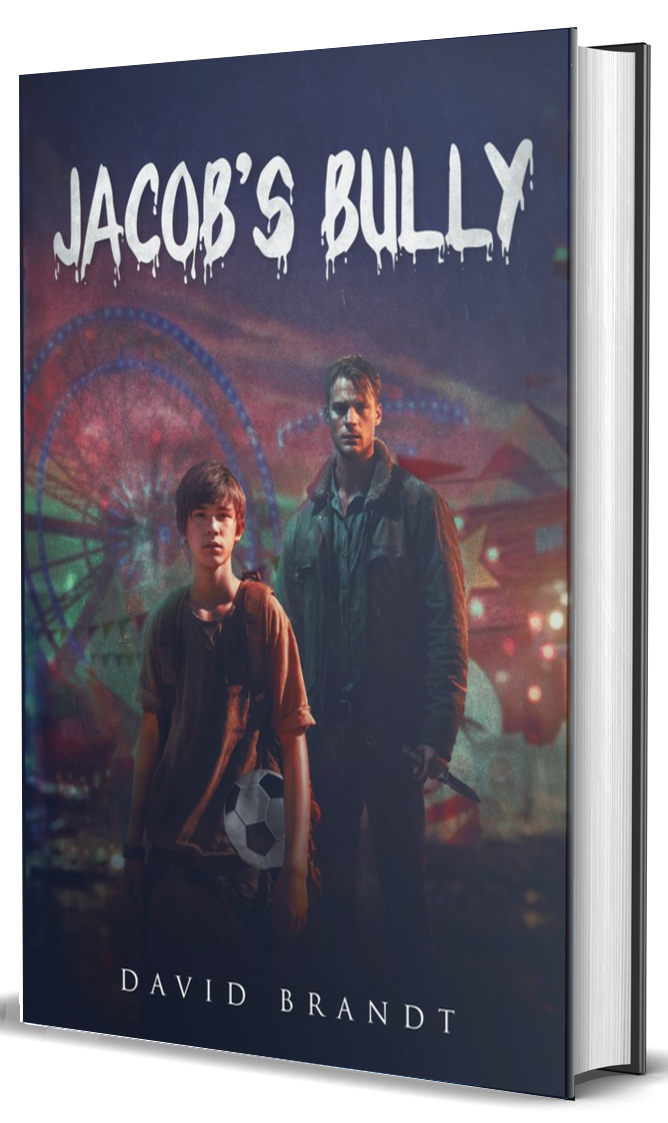 e choices that define us.
At the heart of the novel is Jacob, a teenager trying to navigate the usual challenges of youth while facing a far more insidious danger. As he struggles with bullying and a fractured family, Jacob also finds himself at the mercy of a serial killer who lurks within his seemingly idyllic community. But Jacob’s Bully is not just about survival; it’s about understanding the forces at play, both external and internal, that shape the actions of victims and perpetrators alike
The titular bully isn’t just one person or one act of cruelty. Instead, it’s a representation of the many antagonists in Jacob’s life, from his tormentors at school to the deeply flawed adults around him. Brandt’s portrayal of these bullies is anything but one-dimensional. They’re not caricatures of evil but rather products of their environment—shaped by insecurities, broken homes, and a culture of silence. This nuanced approach challenges readers to look beyond surface-level judgments and consider the roots of cruelty.
Equally compelling is Brandt’s depiction of the true villain: a serial killer whose presence looms large over the town. Unlike traditional thrillers that rely on shock and gore, Jacob’s Bully takes a psychological approach, exploring how such evil can coexist with the mundane routines of small-town life. The killer’s identity and motivations remain shrouded in mystery for much of the novel, adding to the tension and unease that permeates the story. This ambiguity forces readers to confront their own fears and biases, making the killer less of a distant monster and more of an unsettling reflection of humanity’s darker impulses.
But Jacob’s Bully isn’t solely about the antagonists. At its core, it’s a story of resilience and agency. Jacob, while undoubtedly a victim, refuses to let his circumstances define him. His journey is one of self-discovery and strength, as he learns to navigate the shadows around him and find his own light. This resilience isn’t just physical—it’s emotional and moral, as Jacob grapples with the choices he must make to survive and protect those he loves.
The novel also challenges traditional notions of victimhood. Michelle, Jacob’s mother, is a beacon of resilience in her own right, facing her own struggles while fiercely supporting her son. Her sacrifices and quiet strength add depth to the narrative, highlighting the many ways in which people can be both victims and heroes in their own stories. Similarly, other characters who initially seem antagonistic reveal unexpected layers, reminding readers that everyone carries their own burdens and battles.
Brandt’s exploration of villains and victims goes beyond individual characters to examine the community as a whole. The town’s complicity in maintaining the status quo—whether through silence, ignorance, or willful denial—raises important questions about collective responsibility. In this way, Jacob’s Bully is as much a social commentary as it is a thriller, urging readers to consider how societies perpetuate cycles of harm and what it takes to break them.
Ultimately, Jacob’s Bully is a story of shadows—both the literal darkness that conceals danger and the figurative shadows within us all. By unmasking the complexities of its villains and victims, the novel paints a haunting yet hopeful portrait of humanity. It’s a reminder that while darkness may lurk in the shadows, so too does the potential for redemption and resilience.
For readers seeking a story that goes beyond black-and-white morality, Jacob’s Bully offers a rich, thought-provoking narrative. It’s a chilling yet deeply human tale that lingers long after the final page, challenging us to confront the shadows in our own lives and the light that can emerge from them.